Edward Gordon Craig 1872-1966
Edward Gordon Craig was born into the Theatre. His mother, Ellen Terry, was the leading actress in Henry Irving's company.
Craig greatly admired both Terry and Irving, and from a very young age, he performed successfully alongside them. Irving's company represented the pinnacle of London Theatre,
its actors and designers offered the most detailed, realistic, and picturesque productions, performed by the grandest artists of their day.
And yet, Craig was dissatisfied. In On the Art of the Theatre, he says,
"What the Art of the Theatre (or rather we must call it the Work of the Theatre at present) lacks is form. It spreads, it wanders, it has no form."
Craig's mission then, would be to create that form.
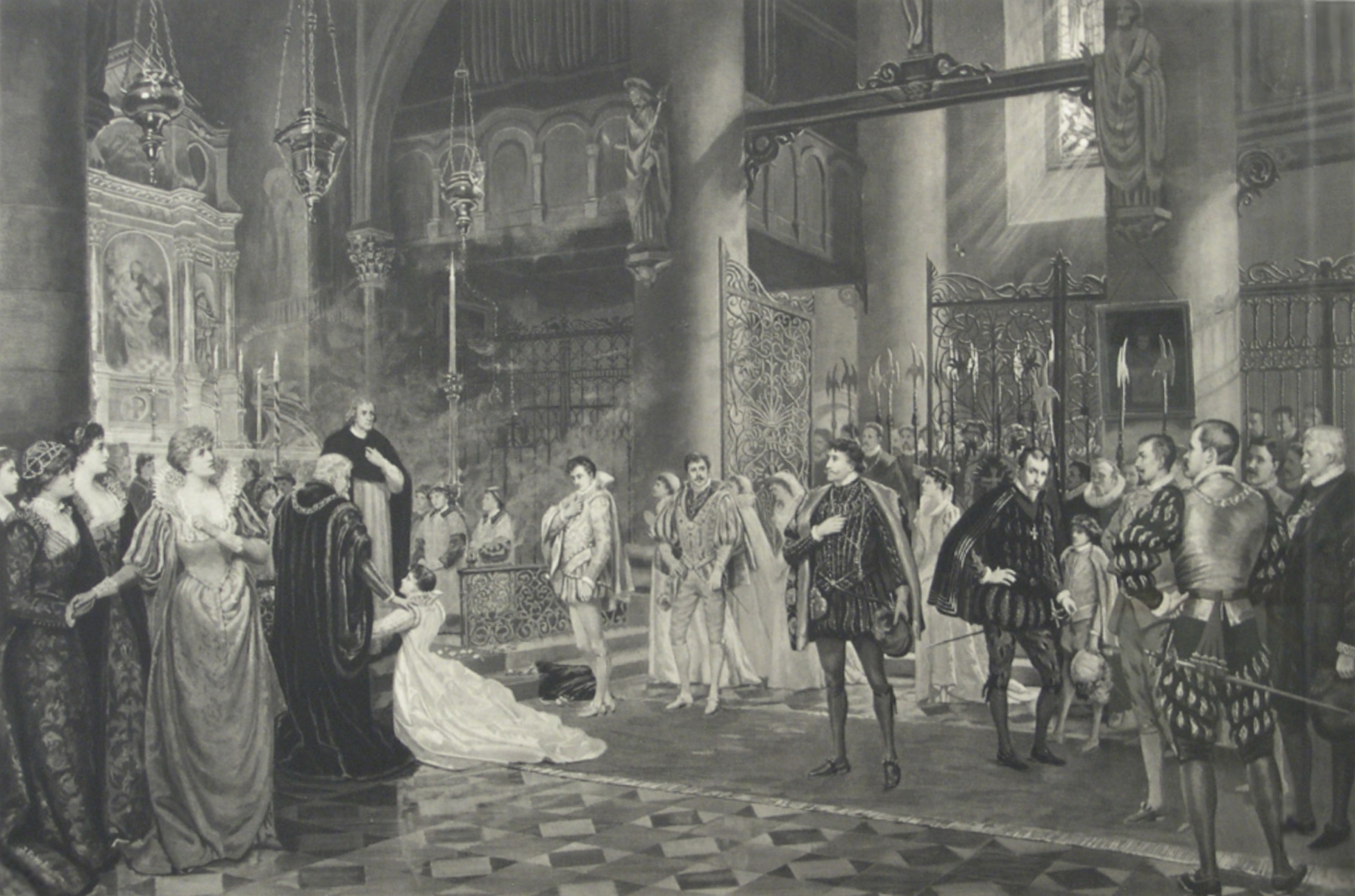
Sir Johnston Forbes-Robertson: Ellen Terry, Henry Irving in Much Ado About Nothing, 1883
National Trust Collections
Craig correctly saw light as the most plastic of scenic elements, and his illustrations in Towards a New Theatre, show how profoundly different the same physical space can be rendered under different lighting conditions.
Mood 1 Mood 2
Mood 3 Mood 4
Towards a New Theatre, 1913
Craig's' recognition both of light as an integral scenic element and of the plasticity of the playing space are major innovations in 20th Century Scenography.


Electra, 1905
Hamlet, 1910
Towards a New Theatre, 1913
Victoria and Albert Museum, London
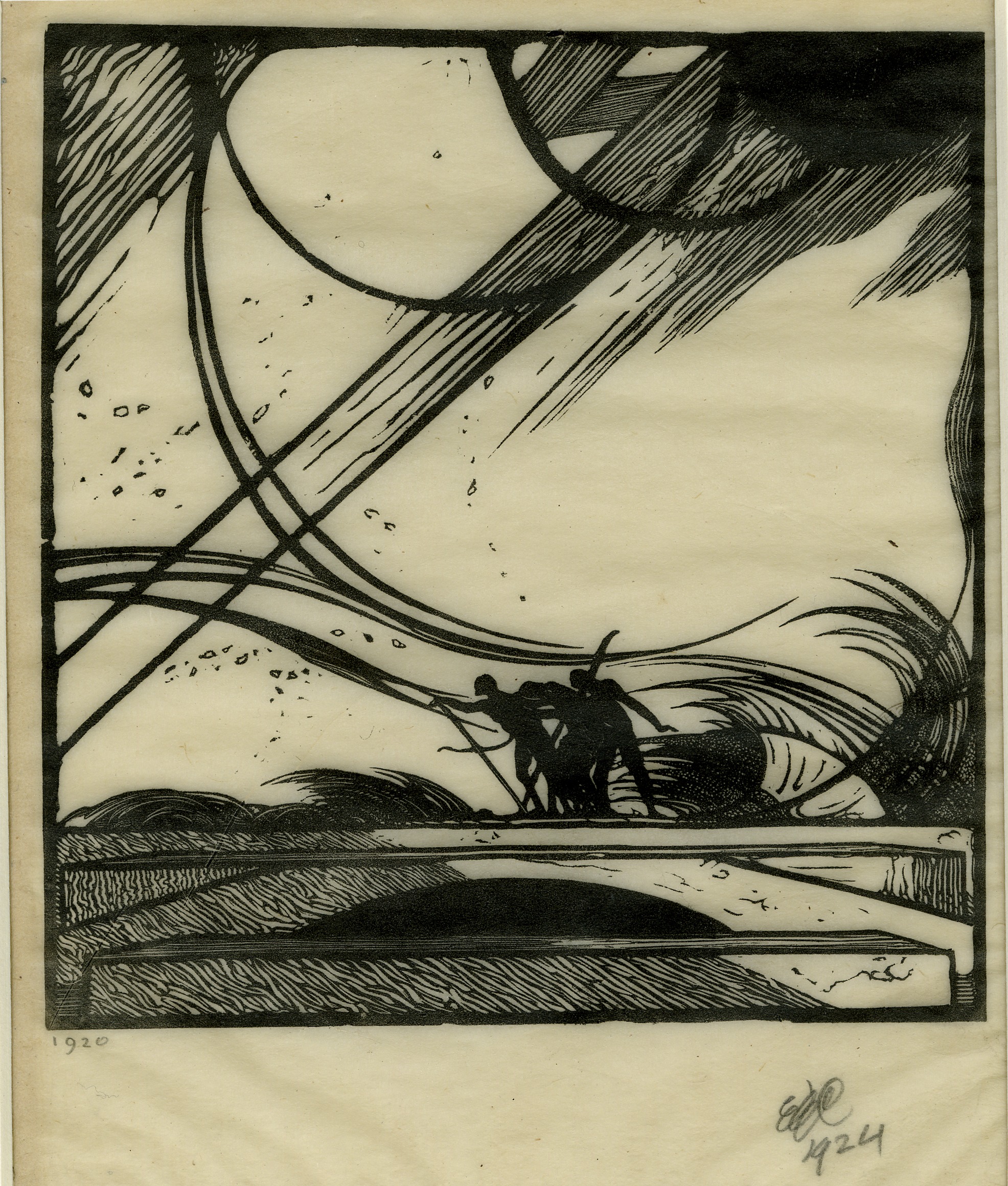

King Lear, 1920
Untitled Scene, c.1906-12
National Gallery of Canada, Ottawa
Museum of Modern Art, New York
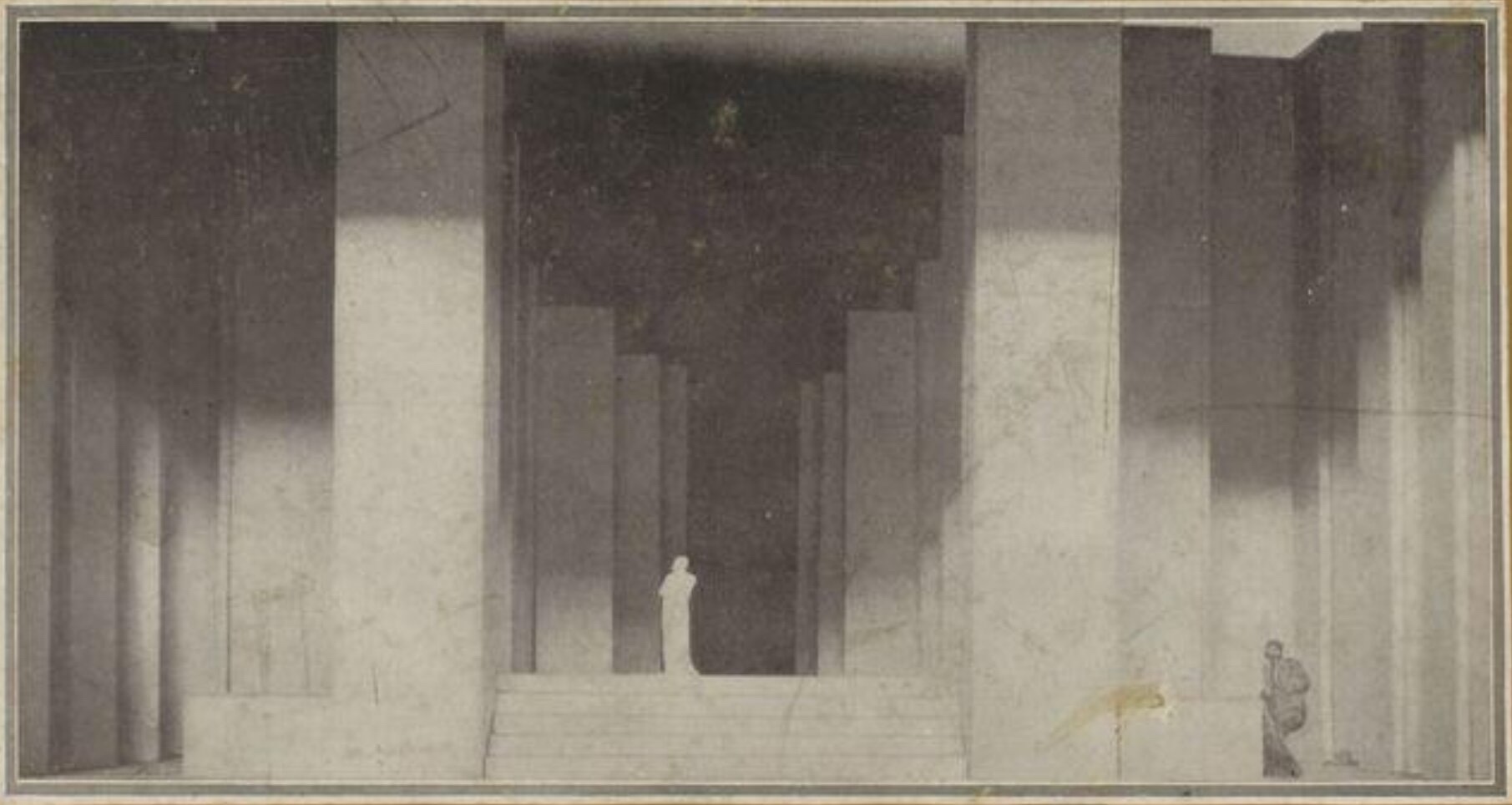
Hamlet Model, 1911
Victoria and Albert Museum, London

Hamlet, Act V, Scene II, Moscow Art Theatre, 1911
Novosti Press Agency

As with Adolphe Appia, very few of Craig's designs were actually realized. But that has not impeded the impact of his work. Craig's influence can be seen in the work of American designers, in particular Robert Edmond Jones and Norman Bel Geddes, whose designs led the way in a revolution against realism in stage design.

Robert Edmond Jones, The Emperor Jones, 1924
McNay Art Museum, San Antonio

Robert Edmond Jones, The Saint, 1924
McNay Art Museum, San Antonio

Norman Bel Geddes, King Lear, 1917
Roger Graham: The Unrealised King Lear of Norman Bel Geddes, 2023